Most therapists in private practice are not web designers. You went to school for counseling, not CSS.
So when it comes time to build a website for your practice, the question isn’t whether you need one — it’s who should build it.
You have three real options: do it yourself with a template builder, go through a web agency, or hire a freelance website designer.
For most solo therapists and small group practices, a freelancer hits the right balance. Here’s why.
A Therapy Website Is Not a Generic Business Website

This is the part that generic “hire a freelancer” articles miss, so let’s start here.
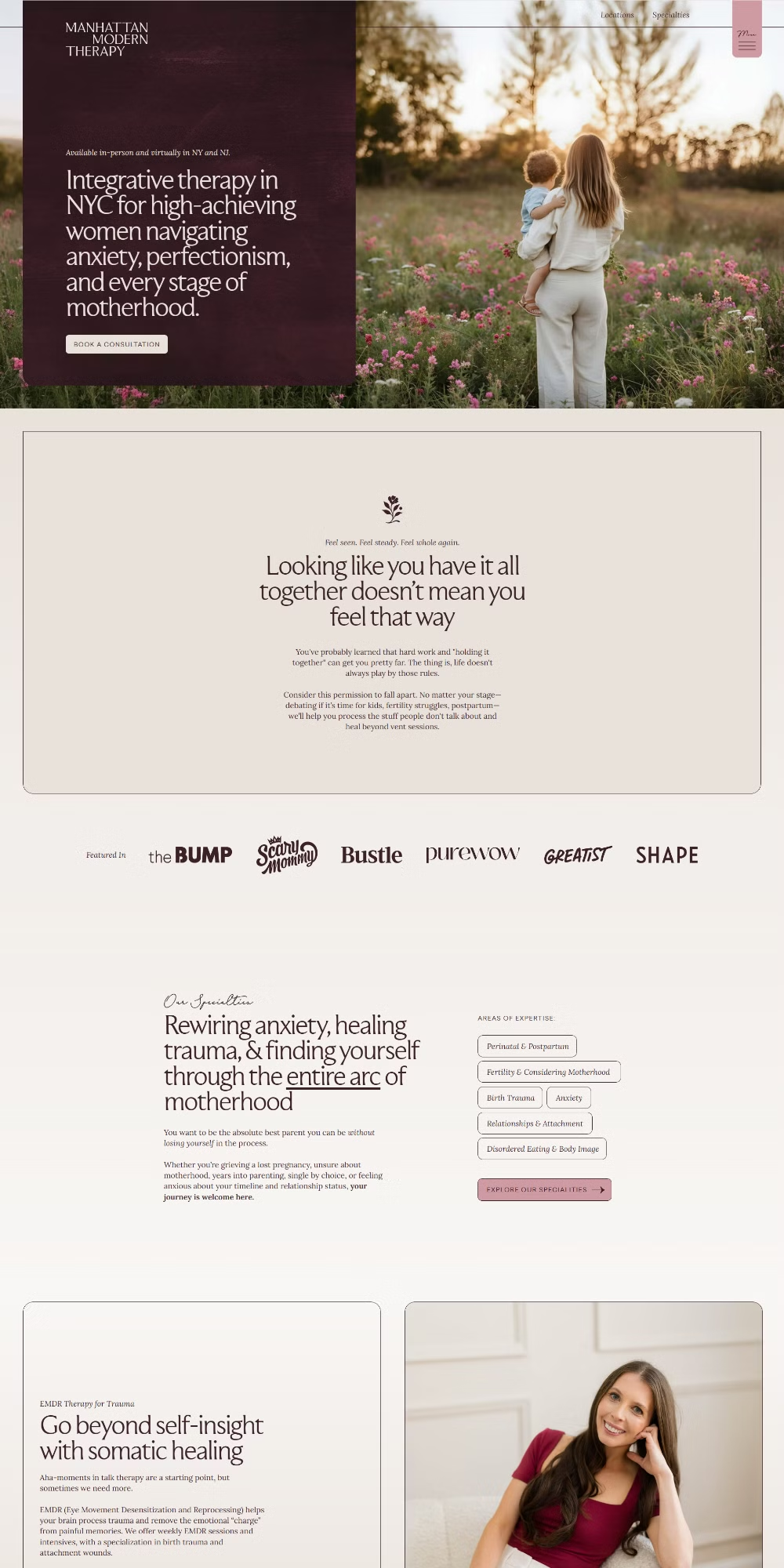
A therapy website has to do something most business websites don’t: it has to build trust with someone who is already vulnerable.
A potential client landing on your site might be working up the courage to ask for help for the first time. If your site feels cold, cluttered, or generic, they leave. Not because your qualifications aren’t good, but because the site didn’t make them feel safe enough to reach out.
That’s a design problem, not a content problem. And it’s exactly the kind of problem a freelance website designer who understands the therapy space can solve.
When I built the site for Shifa Journeys, the brief wasn’t about colors or fonts. It was about how the site should feel to someone who’d never been in therapy before. Every layout decision, every image choice, every button label had to lower the barrier to contact, not raise it. That context shapes the entire project.
A general agency working across dozens of industries at once isn’t going to think at that level for a five-page private practice site. A freelancer who knows this niche will.
What a Freelance Website Designer Actually Does
A freelancer works independently, handles your project from start to finish, and communicates directly with you. There’s no account manager, no handoff between departments, no game of telephone between you and the person actually doing the work.
Many freelancers handle both design and development, which means you’re not paying two people to do one job. You describe the problem, they solve it.
The Cost Difference Is Significant
Agencies typically charge between $75 and $200 per hour. Freelancers are usually $25 to $100 per hour depending on experience. On a full site build, that gap adds up fast.
Freelancers can price this way because they don’t carry agency overhead: no office rent, no salaried support staff, no sales team. What you pay goes directly into the work.
You Talk to the Person Building Your Site
With an agency, your feedback travels through layers before it reaches anyone. You tell the account manager. The account manager tells the project lead. The project lead updates the designer. By the time “can we make the colors feel warmer” gets interpreted, it could mean anything.
With a freelancer, you say a thing and the person doing the work hears it. Revisions are faster. Misreadings get caught early. The finished site looks like what you actually had in mind.
For therapy websites specifically, this matters more than usual. The messaging on your site is personal. Your bio, the way you describe your approach, the language you use for the clients you’re trying to reach — a freelancer can talk through that directly with you. An agency is going to assign a copywriter who’s never spoken to you.
Turnaround Is Faster
Agencies manage many active projects at once. Your site competes for attention with every other client on their roster.
A freelancer working directly with you can give your project focused time. Most private practice sites I build are completed in two to four weeks. Agency timelines for comparable work often run six to twelve weeks, sometimes longer.
If you have a practice launch date, a rebrand deadline, or you’re simply losing clients to competitors with better websites, a freelancer can usually move on your timeline in a way an agency cannot.
Therapy Websites Have Specific Technical Needs

A good therapy website isn’t just attractive. It needs to actually work for your practice.
Mobile responsiveness. Over 60% of people searching for therapists are on their phones. A site that looks fine on desktop but breaks on mobile will lose those visitors before they see your name.
Online booking integration. Whether you use SimplePractice, Calendly, Jane App, or something else, your booking system needs to connect cleanly to your site. A freelancer with experience in this space knows how to do that without it feeling clunky.
HIPAA-aware contact forms. Standard contact form plugins aren’t designed with healthcare in mind. Depending on your jurisdiction and how you handle intake, there are specific considerations around how forms collect and store information. A freelancer who works with therapists will already know to ask about this.
Local SEO for your area. Most therapy clients search for someone near them. Your site needs to be structured so Google can understand your location, your specialties, and the populations you serve. That’s not automatic — it has to be built in.
Fast load times. Slow sites lose visitors. This is especially true for people searching on mobile data. A freelancer handles image compression, caching, and hosting setup in a way that template builders often don’t.
The Attention Your Project Gets Is Different
When you’re one of three or four active clients for a freelancer, your project actually matters in a concrete way. A freelancer’s reputation lives and dies by every site they ship. There’s no team to absorb a bad outcome. That creates real accountability.
For you, that means someone paying attention to the details, thinking about how your site will actually perform, and not rushing through your pages to hit a billing quota.
What to Look For Before You Hire
Not every freelancer is the right fit. A few things worth checking.
Their portfolio. Look at five to ten completed sites. Are they mobile-responsive? Do they load quickly? Do they feel calm and professional, or generic? Have they built for therapy practices or similar service businesses before?
Client reviews. What do past clients say about communication and timelines? Look for reviews from actual businesses, not vague one-liners.
How they communicate upfront. If response time is slow or answers are vague during the hiring conversation, that pattern doesn’t improve once you’re a client.
Whether they ask about your practice. A designer who doesn’t ask about your therapeutic approach, your ideal clients, or how you want people to feel when they land on your site isn’t building a therapy website. They’re building a placeholder with your name on it.
Ownership. Make sure it’s clear in writing that you own the website files, your domain, and all content once the project is complete. Some platforms and some designers make this harder than it should be.
When a Freelancer Might Not Be the Right Fit
Worth being direct about this. Very large group practices with complex internal systems, multiple practitioners, and custom intake workflows may genuinely benefit from a larger development team. Same goes for practices that want a fully custom patient portal or a deeply integrated practice management system built from scratch.
For most solo therapists and small group practices, that’s not the situation. A skilled freelancer handles the full scope comfortably. And if a project outgrows what one person can manage, good freelancers have networks of specialists they bring in when needed.
What the Process Looks Like in Practice
A well-run freelance website project for a therapy practice typically goes like this.
Discovery. You talk through your practice, your clients, your specialties, and what you want the site to do. This is also where booking integrations, contact form requirements, and SEO goals get established.
Strategy and structure. Before any design happens, the freelancer maps out the site: which pages, in what order, with what calls to action. For therapy sites, this usually means a homepage, individual service or specialty pages, an about page, a rates and insurance page, and a contact page at minimum.
Design concepts. You see visual mockups before any development starts. This is where you give feedback on how the site looks and feels. For therapy websites, tone matters as much as aesthetics.
Build. The approved design gets developed into a working site, with all integrations set up and tested.
SEO basics. Page titles, meta descriptions, heading structure, local schema markup, and site speed are handled before launch, not added as an afterthought.
Launch and handoff. The site goes live. You get a walkthrough of how to update content, add blog posts, and manage any ongoing items yourself.
Ongoing support. A good freelancer stays available for updates, changes, and future work. Because they built it, there’s no learning curve when you need something changed.
Frequently Asked Questions
How much should I budget for a therapy website?
For a professional five to eight page private practice site with mobile responsiveness, booking integration, and basic SEO, budget $1,000 to $3,500. Simple single-therapist landing pages can come in lower. Group practice sites with multiple therapist profiles and service pages typically start around $3,000 and go up depending on scope. Always ask for an itemized proposal so you know exactly what’s included.
How long does it take?
Most solo practice websites take two to four weeks from the start of the project to launch, assuming content is ready. The biggest variable is usually how quickly you can provide your bio, photos, and any copy you want included. Group practice sites with multiple pages and integrations may take four to six weeks.
Can a freelancer help with SEO for my therapy practice?
Most professional freelancers build in SEO fundamentals: clean heading structure, fast load times, mobile optimization, proper meta data, and local schema markup. Some specialize in mental health SEO and offer deeper ongoing work, including blog content strategy and local citation building. Ask about this upfront if ranking in local search is a priority.
What happens if I need changes after the site launches?
A good freelancer stays available after launch, either on a per-project basis or through a maintenance arrangement. Because they built the site, updates happen quickly without any back-and-forth explaining what everything is.
Do I need to provide my own photos?
Professional photos of you and your practice space make a significant difference for therapy websites. Potential clients want to see who they’d be working with. Many freelancers can advise you on what to get photographed. If professional photos aren’t possible right away, quality licensed images can bridge the gap temporarily.
If you’re a therapist looking for a freelance website designer who understands the specific needs of private practice, I’d be glad to hear about what you’re building.
I offer a free discovery call to go through your goals and figure out whether we’re a good fit. Check my portfolio or reach out directly to get started.