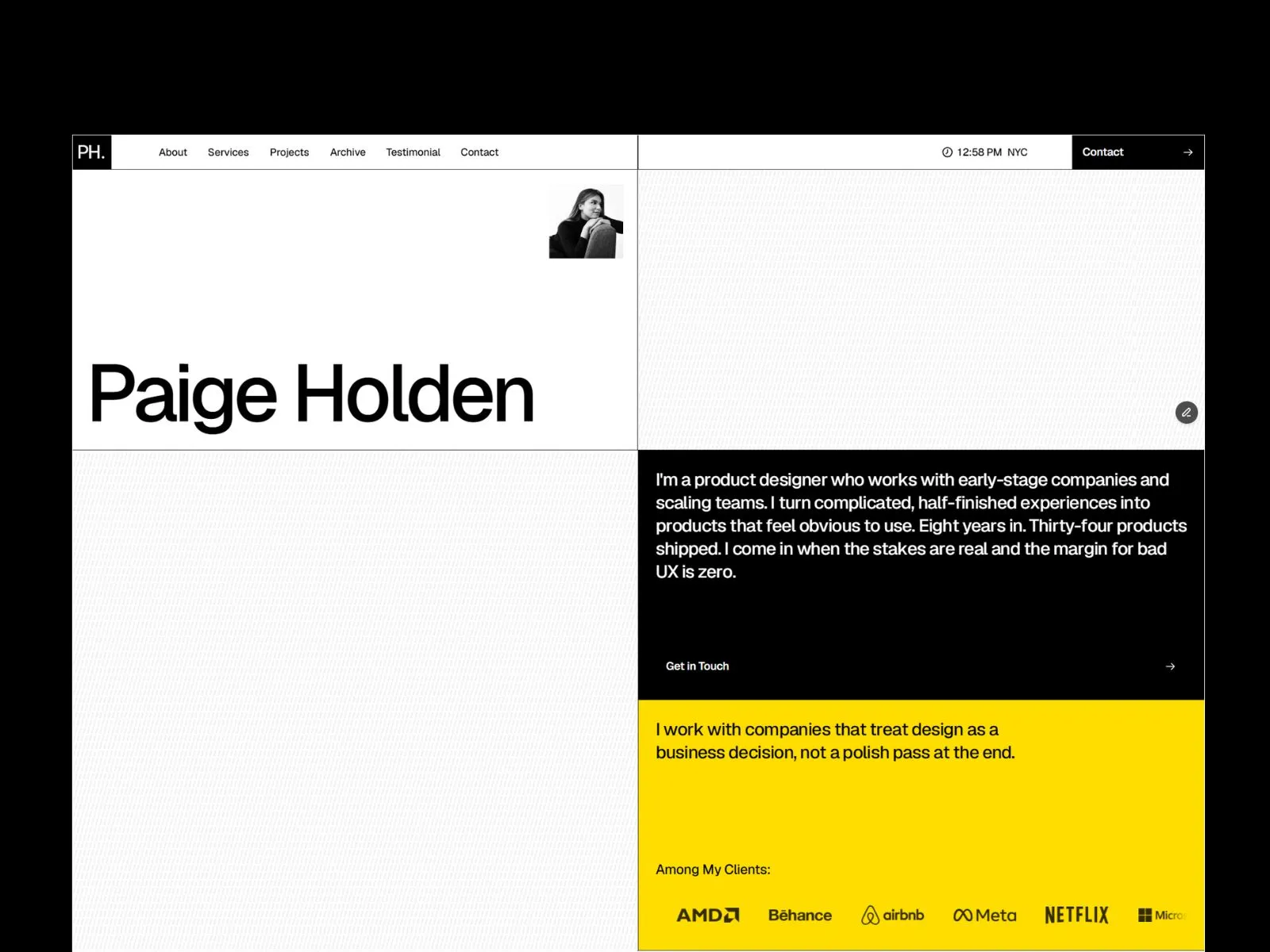
There are now over 122,000 active coaches worldwide, up 54% since 2019. The market is growing fast, and so is the competition. Most coaches have a website. Very few have one that does any real work.
The average coaching website converts somewhere between 1% and 3% of visitors. That means 97 out of every 100 people who land on your site leave without doing anything. Some of that is traffic quality. A lot of it is the site itself.
The difference between a site that books discovery calls and one that sits there looking professional while doing nothing usually comes down to four questions your visitor is silently asking. If your site doesn’t answer them clearly and quickly, they leave. Your site has roughly four seconds to earn the next four.
Here’s what those questions are and how to answer them.
What Problem Can You Solve for Me?
This is the first thing someone needs to know the moment they land on your homepage. Not who you are. Not your certifications. Not your story. The problem you solve.
Your header is where this lives. Large text, plain language, specific outcome. Something like “Stop spinning your wheels and start scaling your business” tells someone in two seconds whether they’re in the right place. “Welcome to my coaching practice” tells them nothing.
The brain is ruthless about attention. It’s filtering out noise constantly, and anything that doesn’t immediately signal value gets ignored. Your header needs to pass that filter fast.
Two things belong above the fold on your homepage: the problem you solve stated plainly, and a button to take the next step. That button should be visible at all times, not buried below three paragraphs of copy. “Book a free discovery call” is a low-friction action. It asks for a conversation, not a credit card. Keep it visible and keep it simple.
What your header is not for: your biography, your methodology, your philosophy, or a long list of services. All of that can come lower on the page. The header has one job, and that’s to convince someone to keep reading.
How Do You Actually Solve It?
A lot of coaches answer question one and then go vague on question two. They describe their coaching in ways that could apply to almost anyone in the field. Vague is the enemy of conversion.
If you ran a restaurant and the menu just said “protein,” you’d sell less than the place next door offering a cheeseburger. Same service, wildly different specificity. Specificity sells because it gives the brain something concrete to evaluate.
Are you offering one-on-one coaching? A group mastermind? A 90-day program with weekly calls? A fractional leadership arrangement? Name it. People need to picture what they’re buying before they’ll consider buying it.
As you scroll further down the page, the ratio to aim for is roughly 75% focused on the client’s problem and 25% on your solution. Most coaches get this backwards. They spend the majority of the page talking about their method and only briefly acknowledge what the client is actually going through.
Talk about the problem in detail first. Name the specific frustration. Describe what it feels like to be stuck in it. Don’t soften it. If someone is struggling with something real, acknowledging that struggle clearly is what makes them feel seen. Only once you’ve done that does your solution land with any weight.
There’s a reason the most compelling coaching copy tends to go negative before it goes positive. If a medication ad only ever showed happy outcomes and never mentioned the side effects, you’d trust it less. Acknowledging the hard parts of your client’s situation before offering a way out builds more credibility than leading with the win.
The role you’re positioning yourself for here is the guide, not the hero. Your client is the one on the journey. You’re the person who has been where they are and found the way out. “I know what this feels like, and there’s a path forward” is a more powerful message than any credential.
Will This Actually Work?
Once someone understands your offer, the next question is whether they can trust it. Testimonials are the standard answer here, but most coaches collect them wrong.
When you ask a happy client to write you a testimonial, they’ll write something long and warm and full of general praise. “Working with [coach] completely changed my life” reads like every other testimonial on every other coaching website. It’s pleasant to read and nearly useless for conversion.
Write the testimonial for your client. Give them a one-sentence template that captures a specific outcome: what the situation was before, what they did, and what changed. Keep it to one punchy sentence. Then ask if that represents their experience and whether they’re comfortable you use it. Most people say yes.
Specific beats glowing every time. “In 90 days I went from 3 clients to a fully booked practice” converts better than “This coaching experience was truly transformative.”
After social proof, the next thing that lowers resistance is showing people the actual steps. A three-step process does this well: something like “1. Book a call. 2. We build your strategy. 3. You execute and grow.” Simple, concrete, easy to visualize.
This matters because right before someone decides to spend money or time, there’s a moment of doubt. The fog of “what if this doesn’t work” or “what am I actually signing up for” can stop an otherwise convinced person. A clear, simple process cuts through that fog. Baby steps feel safe. Big leaps feel risky. Make the first step small enough that saying yes feels obvious.
Is It Worth the Cost?
Someone can believe you solve a real problem, understand how you do it, and trust that it works for others, and still hesitate because they’re not sure it’s worth the money for them specifically.
The most direct way to answer this is with data. Not vague claims about transformation. Actual numbers.
“63% of my clients see at least a 20% revenue increase within six months” is a sentence worth a thousand testimonials. It gives a skeptical person something concrete to weigh against the cost of your program. Even rough internal data is better than nothing. If you’ve worked with 30 clients and 22 of them hit a specific outcome, that’s a number worth putting on your site.
If you don’t have statistics yet, this is the first thing to start tracking. Start asking clients at the 60 or 90-day mark how their situation has changed in measurable terms. Revenue, hours saved, clients signed, months to a specific milestone. Over time you’ll build a data set that answers question four for every future client before they even have to ask.
The Lead Generator: What to Do With Everyone Who Isn’t Ready Yet
Even with a well-built site that answers all four questions clearly, most visitors still won’t book a call on the first visit. This is normal. Trust takes time, and most people are somewhere in the middle of deciding whether they need coaching at all.
This is what a lead generator is for. Some kind of free resource, an assessment, a guide, a short email course, offered in exchange for an email address.
The framing matters. An “assessment” tends to work well because it gives someone something immediately useful (a result or insight about their situation) rather than just putting them on a list. The bar to enter an email address is low as long as what they’re getting feels genuinely valuable.
Once you have that email address, you have a reason to stay in contact. Not to sell constantly, but to deliver value consistently. One useful email per week, for a long time, builds more trust than the best landing page ever will. The landing page earns attention. The emails earn trust. Trust is what converts to clients.
The coaches who do this consistently, sending something useful every week for months or years, end up with audiences that feel like they already know them before they ever book a call. That’s an enormous advantage in a market with 122,000 competitors.
How This All Fits Together on the Page
Putting it all together, here’s what a high-converting coaching homepage needs, in order:
Header: The problem you solve, stated plainly. One clear button to book a call.
Value stack: Three short phrases (or a sentence each) describing what you offer and who it’s for. Specific format: one-on-one, mastermind, program, fractional role.
Problem section: 75% of the content here should speak to the client’s frustration, not your solution. Name the specific pain. Go negative before you go positive.
Your story as guide: A brief section where you position yourself as someone who has been in the same place, not as the hero of the story. “I’ve been in the hole you’re in” connects better than a list of credentials.
Testimonials: One punchy sentence each, focused on a specific, measurable outcome. Write the template for your clients to fill in.
Simple three-step process: How working with you works, in plain language. Make the first step feel easy.
Statistics: Real numbers from real client outcomes. Even rough internal data is more convincing than general claims.
Lead generator: A free resource in exchange for an email. An assessment works well. This is how you stay in contact with everyone who isn’t ready to book yet.
Call to action: One clear button to book a discovery call. Repeated throughout the page, not just at the bottom.
FAQ
How long should a coaching website homepage be?
Long enough to answer all four questions a potential client is asking: what problem you solve, how you solve it, whether it works, and whether it’s worth the cost. For most coaches that’s a moderately long page, not a one-screener. Short pages tend to skip one of the four questions and leave conversion on the table.
Should a coach list their prices on their website?
There’s no universal answer here, but hiding your pricing entirely tends to create friction. If someone has to reach out just to find out whether they can afford your program, many will skip that step. A range or a starting price is often enough to qualify the right people and filter out mismatched inquiries before they become wasted calls.
What makes a coaching testimonial actually convert?
Specificity. A testimonial that names a concrete result (“I signed 4 new clients in my first month”) outperforms a general endorsement every time. Write a one-sentence template that captures the before, the action, and the outcome, and ask clients to confirm it rather than starting from a blank page.
What’s a good lead generator for a coaching website?
An assessment tends to perform well because it delivers immediate value. Something that helps the visitor understand their own situation, a diagnostic for where their business is stuck, a scorecard for their leadership, a quiz that identifies their coaching style gaps. Keep it short, make the result genuinely useful, and ask for an email to receive it.
How often should I email my coaching list?
Once a week is the benchmark that tends to build real trust without burning out your audience. Consistency matters more than frequency. A coach who sends something useful every week for a year builds a relationship that no homepage, however well-structured, can replicate on its own.
What to Do Next
If your coaching website isn’t answering these four questions, it’s probably costing you clients without you realizing it. The good news is that most of the fixes are structural. You don’t always need a full rebuild , sometimes it’s a clearer header, better testimonials, and one visible button.
If you want a coaching website built to do this work from the start, or a redesign of what you already have, get in touch and we can look at what your site is missing.