Most therapists are excellent at their work. Websites are a different story.
That’s not a criticism. Clinical training covers evidence-based practice, not domain names or contact forms. But here’s the gap it creates: 77% of people seeking mental health support begin their search on Google, and “therapist near me” pulls over 301,000 searches every month. Each one of those is someone ready to reach out.
If your site is broken, bare, or nonexistent, most of them will never find you.
This guide walks through everything a therapist needs to build a working website from scratch: what pages to build, what makes them effective, how to show up on Google, and how to design a site that actually feels safe to a nervous first-time visitor. Beginners welcome.
Why Does a Therapist Need a Professional Website?
A professional website is the single most controllable marketing asset a therapist owns. Unlike Psychology Today or Zocdoc, you set the message, the tone, the structure, and the story.
Here’s what it does in practical terms:
- Brings in clients without referrals. A well-optimized site generates inquiries while you sleep. Organic search traffic doesn’t stop when you stop paying for it.
- Builds trust before the first call. People researching therapy are cautious. A professional site answers their questions privately, at their own pace, before they feel ready to reach out.
- Positions you as a specialist. A generic directory profile lists you. A website lets you explain who you help, how you work, and why you’re the right fit for a specific type of client.
- Reduces time-wasting inquiries. When your fees, specialties, and availability are visible upfront, the people who contact you are already a reasonable fit.
- Works as a 24/7 intake system. With a contact form or booking widget, potential clients can reach out at 11pm on a Tuesday. You respond when you’re ready.
Two or three new clients typically cover the cost of a professionally built site. After that, it’s pure return.
What Makes a Good Therapy Website?
A good therapy website is one that makes the right visitor say “this practice might be for me” within the first ten seconds and then makes it easy for them to reach out.
That sounds simple. Most sites miss it.
The difference between an effective therapy website and an average one usually comes down to these five things:
- Specificity. “I help people live their best lives” tells no one anything. “I work with adults navigating anxiety, burnout, and major life transitions” tells the right person they’ve found their therapist.
- Credibility signals. License number, credentials, professional memberships. Keep them visible, not buried.
- Calm, human design. Not clinical. Not busy. Soft colors, real photos, readable text.
- Clear next step. One obvious thing to do: fill out a form, book a call, send an email.
- Mobile performance. Most visitors arrive on a phone. If the site is slow or awkward on mobile, they leave.
When someone lands on your site, they’re often feeling vulnerable. Designing for that emotional state (calm, credible, low-friction) is what separates a site that converts from one that doesn’t.
What Pages Does a Therapy Website Need?
You don’t need a big website. You need the right pages, done well.
| Page | Purpose | What to Include |
|---|---|---|
| Home | First impression, filter visitors | Who you help, your specialty, a real photo, and a clear CTA |
| About | Build personal trust | Your background, approach, training, credentials |
| Services | Match Google searches and explain your work | One page per specialty with plain-language descriptions |
| Fees & Insurance | Reduce hesitation | Session cost, sliding scale policy, insurance accepted |
| Contact | Convert interest to inquiry | Short form, phone/email, response time expectation |
| FAQ | Answer pre-contact questions and rank on Google | Insurance questions, process questions, telehealth details |
| Blog (optional) | Long-term SEO, trust building | Articles targeting questions your clients search |
A lot of therapy website friction comes from unanswered questions about location, telehealth availability, fees, and insurance. Put that information somewhere easy to find. Burying it doesn’t help anyone. It just pushes people toward a competitor whose site is clearer.
What Are the Key Elements of an Effective Therapy Website?
An effective therapy website has two jobs: build enough trust for someone to reach out, and give Google enough structure to rank it.
These elements handle both:
Your Homepage
Lead with who you help, not a welcome message. “Welcome to my practice” is the most common opening on therapy websites and the least useful. A visitor doesn’t need a greeting. They need to know in three seconds whether they’re in the right place.
Write something like:
“I work with adults in [City] dealing with anxiety, chronic stress, and difficult life transitions. In-person and online sessions available.”
That’s more useful than a paragraph of wellness language.
A Real Photo of You
Not a stock image of a candle or a serene landscape. People are choosing a therapist. They want to see who you are. A clear, approachable photo on the homepage is one of the highest-trust elements on the entire site.
Separate Service Pages
One page per specialty. Whether you focus on anxiety, trauma, couples counseling, or myofunctional therapy, each gets its own dedicated page. This matters for Google too: a page titled “Anxiety Therapy in [City]” can rank for “anxiety therapist near me.” A catch-all services page ranks for nothing specific.
Credentials, Visible
License number, degree, professional memberships. Don’t make visitors guess whether you’re qualified. Put it in your bio, your footer, and your About page.
A Low-Friction Contact Method
A short form and a clear next step. Name, email, brief reason for reaching out. Nothing longer. If booking a consultation feels complicated, people leave before completing it.
Fees on the Page
You’re not required to list fees. But doing it upfront reduces time-wasting inquiries from people who can’t afford your rate, and it builds trust with those who can. Transparency is credibility.
How to Create a Calming Therapy Website
Design for emotional safety first. A person researching therapy is often anxious, uncertain, and doing it quietly. The visual feel of your site is doing work before a single word is read.
Colors: Soft, muted tones: sage green, warm beige, dusty blue, and cream. Not clinical white. Not loud brand colors. The palette should feel like a calm room, not a waiting room. Explore trending color palettes for therapy websites.
Typography: Clean, readable fonts. Nothing decorative or small. Body text at 16–18px minimum. Generous line spacing. Short paragraphs, two to four lines at most.
Images: Real photos of you or your space. Nature imagery works as a secondary element but shouldn’t carry the whole page. Authentic beats polished.
White space: Don’t fill every inch. Breathing room in a layout communicates calm. A cluttered page creates cognitive load, the opposite of what a therapy site should do.
Navigation: Five items maximum in the main menu. Visitors shouldn’t have to hunt. If they have to think about where to go, the friction is already costing you.
Load speed: A slow site undermines everything. Run your site through Google PageSpeed Insights after launch. Aim for a score above 80 on mobile. Slow load times hurt both user trust and your Google rankings.
Which Platform Should You Use to build a Therapy Website?
| Platform | Best For | SEO Control | Difficulty | Cost/Year |
|---|---|---|---|---|
| WordPress | Long-term growth, full ownership | Excellent | Medium | $100–300 |
| Squarespace | Clean design, easy to manage | Good | Easy | $200–400 |
| Wix | Fastest to launch, flexible | Good | Easy | $160–360 |
| Framer | Modern design, fast performance | Very Good | Medium | $150–300 |
| Webflow | Custom design, group practices | Excellent | Hard | $200–400 |
WordPress is the strongest long-term choice for SEO. You own everything, plugins cover almost any feature you need, and it’s the platform most web designers work in. The tradeoff is a steeper learning curve.
Squarespace or Wix is the right starting point if you want to launch quickly without a designer. Both produce clean, mobile-friendly sites with booking integrations built in.
Framer is worth considering if design matters to you. Sites built in Framer tend to load fast, score well on Google’s performance metrics, and look more polished than most template-based alternatives.
There’s no universally correct answer. A well-configured Squarespace site beats a poorly built WordPress site. Pick the platform you’ll actually maintain, or work with a designer who handles it for you.
How to Get Your Therapy Website Found on Google
Getting found is a separate skill from building a good site. You can have both, or just one. Ideally you want both.
1. Set Up Google Business Profile
Free. High impact. A complete, accurate Google Business Profile puts your practice on Google Maps and in local search results. Use “Psychotherapist” or “Counselor” as your primary category. Fill in your service area, hours, specialties, and a description that includes your city and what you treat.
2. Use Keywords Your Clients Actually Search
Don’t write for colleagues. Write for someone who just typed “therapist for anxiety in [city]” into Google. Each service page should target a specific phrase. Use it naturally in the page title, the first paragraph, and at least one subheading. Don’t force it. Write for the person, not the algorithm.
3. Get Listed in Directories
Start with broad platforms like Psychology Today, Zocdoc, and TherapyDen. Then, submit your site to niche directories tailored to your specific audience. For example, if your practice provides ABA therapy or supports neurodivergent children, getting listed on special needs directories puts you directly in front of the parents searching for you. These listings count as citations, which Google uses to verify your practice is real and locally relevant.
4. Write a Few Targeted Blog Posts
Three to five well-written posts answering questions your clients actually search can pull consistent traffic for years. Topics like “how to prepare for your first therapy session,” “what is CBT and is it right for me,” or “how to find a trauma therapist” get searched regularly and don’t require a big writing investment upfront.
5. Keep Your NAP Consistent
NAP stands for Name, Address, and Phone number. Make sure these are identical across your website, Google Business Profile, and every directory listing. Even small inconsistencies like “St.” vs. “Street” create confusion for Google’s local ranking algorithm.
What Does a Therapy Website Cost?
| Build Type | Cost | Time Investment | Best For |
|---|---|---|---|
| DIY (Squarespace/Wix) | $160–400/year | 20–40 hours | New practices, tight budgets |
| Template customization | $500–1000 | Minimal | Established practices wanting polish |
| Semi-custom with copywriting | $1500–2500 | Minimal | Practices focused on growth |
| Fully custom | $2500–5000+ | Minimal | Group practices, competitive markets |
Two to four new clients typically covers the cost of professional design. After that, the site keeps generating leads without ongoing spend. For most therapists, the question isn’t really whether to invest in a website. It’s how much to spend upfront versus how quickly you want results.
Common Mistakes That Hurt Therapy Websites
Most of these are easy to fix once you know to look for them.
- Writing copy that speaks to everyone. Specificity is what makes someone feel seen. Broad language makes nobody feel anything.
- No photo of yourself. The most trust-building element on a therapy site and the most commonly skipped.
- One big services page. It’s harder for Google to rank and harder for clients to self-select. Separate pages per specialty solve both problems.
- Contact form that asks too much. Name, email, and a brief message is enough. Insurance, date of birth, and history questions belong in intake paperwork, not a website form.
- Not mobile-testing before launch. Most visitors are on phones. Test everything on yours before you publish.
- Ignoring Google Business Profile. Your website and your Google profile work together. One without the other leaves traffic on the table.
- Outdated information. A fee that changed six months ago, telehealth availability that’s no longer accurate, or an old phone number undermines trust fast.
Frequently Asked Questions
What makes a good therapy website for beginners?
A good therapy website for beginners needs five things: a focused homepage that explains who you help, a real photo of yourself, one service page per specialty, visible fees and contact information, and a Google Business Profile connected to your location. Start with those before worrying about anything else.
Do I need a website if I’m already on Psychology Today?
Yes. Directory profiles help with visibility, but you don’t own them. A website gives you full control over your message and your SEO. It also builds more trust than a directory listing because visitors can explore your voice, your approach, and your space.
How long does it take to rank on Google?
For local searches, expect three to six months before seeing meaningful traffic from a new site. Publishing targeted content and building directory listings consistently will speed this up.
Do I need to list my fees on my website?
You don’t have to. But therapists who post fees upfront tend to receive more qualified inquiries from people who can afford the rate and have already decided it’s worth it.
Can I build my own therapy website without technical skills?
Yes. Squarespace, Wix, and Framer are all designed for non-technical users. If you have a clear sense of what you want to say and a few hours, you can build something functional on your own. The harder part is usually the copy: knowing what to write on each page. That’s where working with a web designer who understands small practices pays off most.
What to Do First
You don’t need to tackle all of this in a weekend. Here’s what actually matters, in order:
- Choose a platform (Squarespace or Wix if you’re starting solo, WordPress or Framer if you want more control)
- Build your core five pages: Home, About, Services, Fees, Contact
- Add a real photo of yourself to the homepage
- Create a separate page for each specialty
- Set up and complete your Google Business Profile
- Get listed on Psychology Today and two or three other directories
- Add an FAQ page once you notice which questions keep coming up in consultations
- Write one blog post per month targeting a question your clients search
Get the first five done. Everything else compounds on top of them.
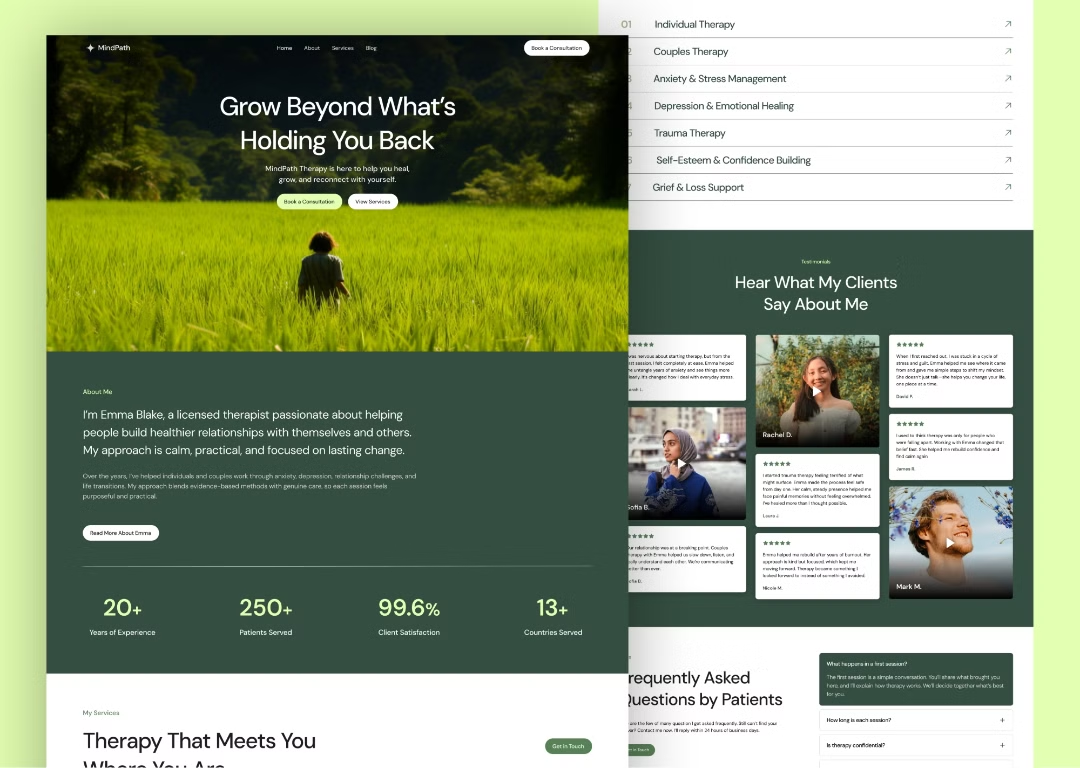
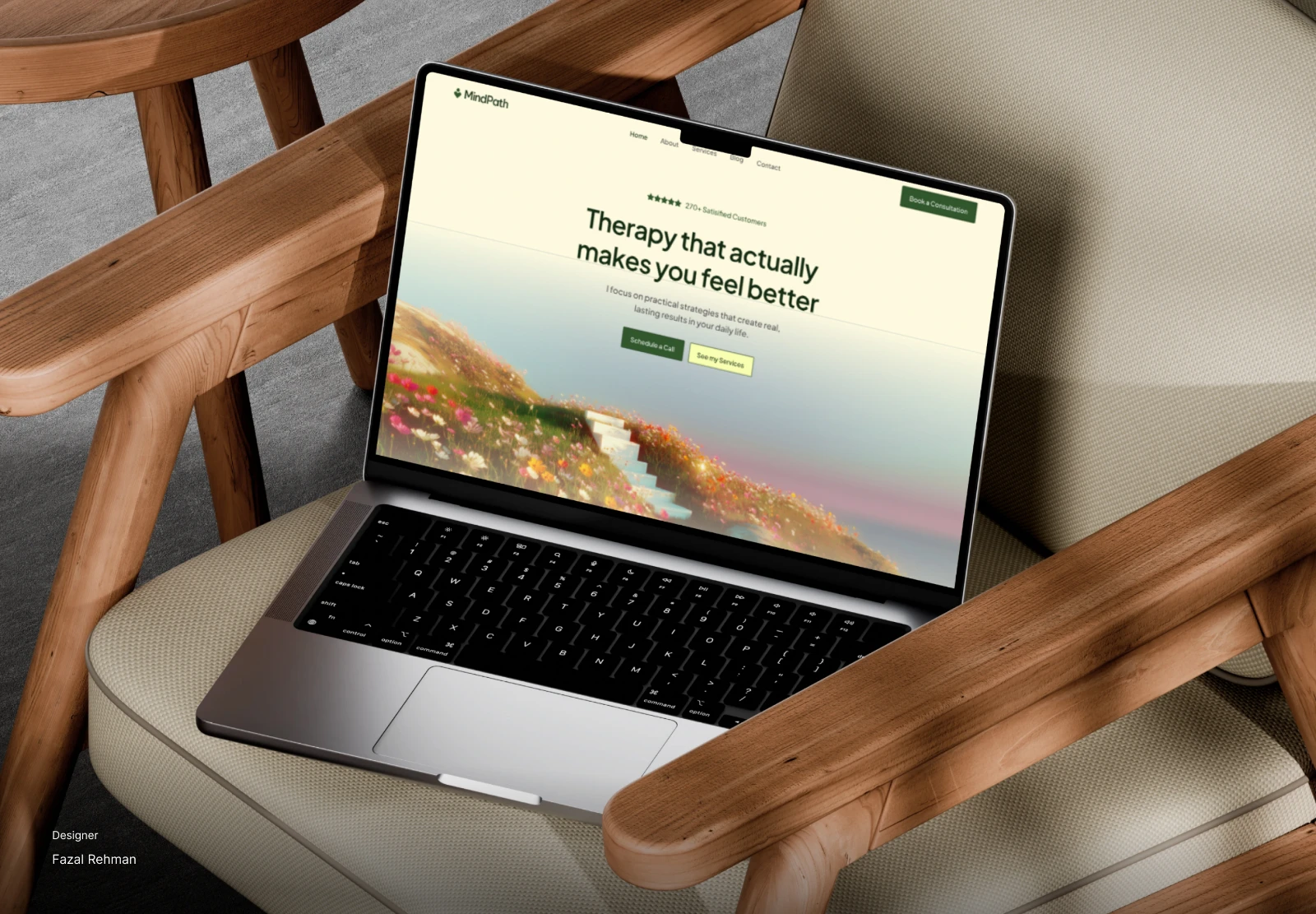
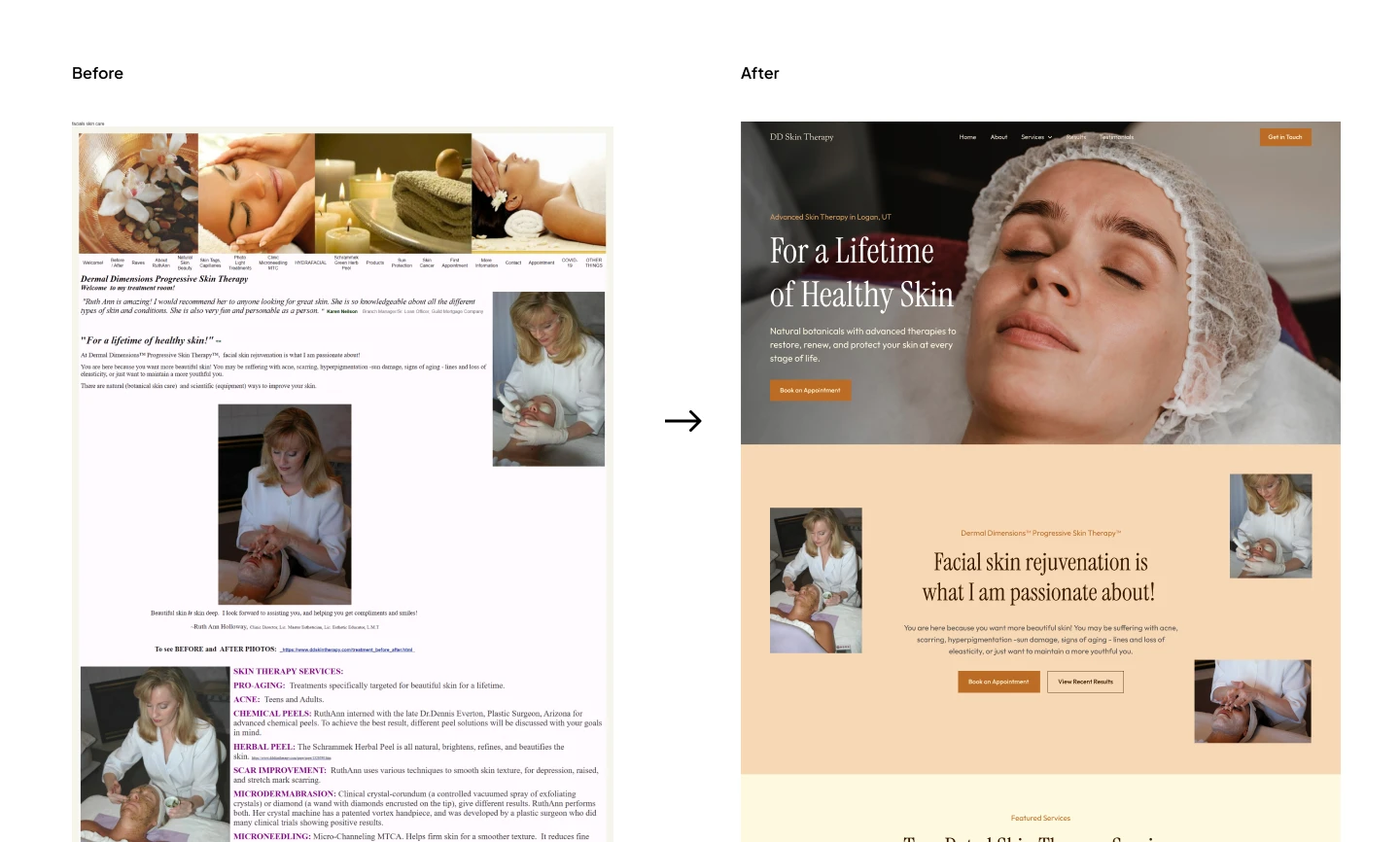
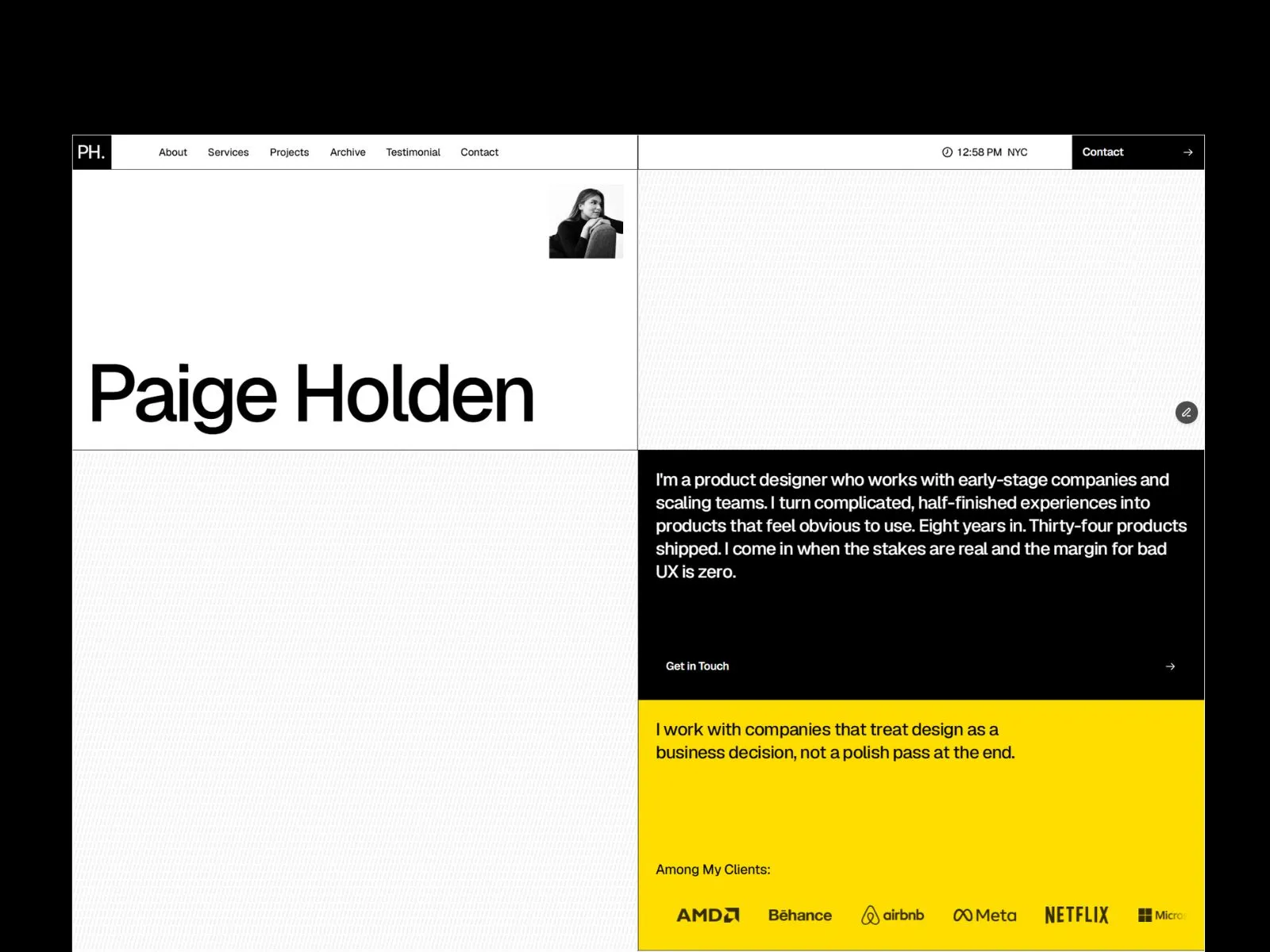
Want a therapy website that’s built to rank, designed to convert, and done properly from day one? Get in touch. I work with small practices and know what actually works. Some of my work is listed below: