You need a website. You open up Squarespace, start dragging things around, and three hours later you’ve got something that sort of looks like a website. It’s fine. Maybe. But is “fine” good enough when someone is deciding whether to spend money with you?
This is the real question behind the “DIY vs. hiring someone” debate. Not which one is cheaper on paper, but which one actually moves your business forward. Here’s an honest look at both sides.
What DIY Website Builders Are Actually Good At
Website builders like Squarespace, Wix, and Webflow have improved a lot. For someone who wants something basic online with minimal budget, they do the job. You can get a decent-looking single page or small site live in a weekend without touching a line of code.
DIY makes sense when:
- You’re pre-revenue and genuinely cannot justify the spend yet
- You need a placeholder while your real site gets built
- Your business runs almost entirely on word of mouth and the website is just a credibility check
If you fall into one of those categories, a DIY site is a reasonable short-term move. The problem is most small business owners don’t stay in those categories for long, and the website they threw together in a weekend tends to stick around way past its expiry date.
Where DIY Websites Start to Cost You
The hidden cost of a DIY website isn’t the monthly platform fee. It’s the time you spend building it, the clients you don’t convert because the site isn’t doing its job, and the Google searches you never show up in.
Time. You’re not a web designer. Getting a DIY site to look genuinely professional takes far longer than the platform’s ads suggest. Time you spend on that is time you’re not spending on your actual business. If you bill by the hour or value your time at all, the math usually doesn’t work in favour of doing it yourself.
Conversions. A website that looks okay is not the same as a website that converts. There’s a difference between a site someone visits and a site that turns visitors into paying clients. Layout, copy hierarchy, load speed, mobile experience, and clear calls to action all feed into that. Most DIY sites miss several of these.
SEO. This is the biggest one. Most website builders produce bloated, slow-loading code that search engines don’t love. You can do some basic on-page SEO yourself, but the technical foundation matters a lot, and that’s where DIY platforms tend to fall short.
What You Actually Get When You Hire a Web Designer
A professional web designer isn’t just making something look nice. They’re thinking about structure, user flow, load speed, and how the site serves your business goals from day one.
When you work with someone who specialises in small business websites, you get:
- A design built around your specific audience, not a generic template
- Mobile-first build (this matters more than ever)
- On-page and technical SEO done properly from the start
- A clear path for visitors to take the next step, whether that’s calling you, booking, or buying
- Someone to handle the technical parts you don’t want to think about
The cost varies depending on who you hire and what you need, but for a small business a professionally built custom site typically runs anywhere from $500 to $3,000 as a one-time project. Some designers also offer monthly plans if you’d prefer to spread the cost and have ongoing support included.
The Real Cost Comparison
Let’s put actual numbers to this.
| Features | DIY Website | Hired Web Designer |
|---|---|---|
| Upfront cost | $0–$30/month | $500–$3,000 one-time |
| Your time to build | 15–40+ hours | Minimal |
| Design quality | Template-level | Custom |
| SEO foundation | Weak | Strong |
| Ongoing control | Platform-dependent | Fully yours |
| Converts visitors to clients | Rarely optimised | Built to |
If you’re a tradesperson, consultant, or service business charging $50 to $200 per hour, spending 30 hours on a DIY website costs you $1,500 to $6,000 in lost earning time. At that point, the “cheap” option isn’t cheap at all.
When DIY Stops Working
There’s usually a moment small business owners hit where they realize their website is actively holding them back. It might be when a competitor shows up above them in search results. It might be when a potential client mentions the site looked “a bit basic.” It might be when they try to update something simple and end up breaking half the page.
That moment tends to come sooner than expected. And by then, the DIY site has already been live long enough to leave a less-than-ideal first impression on a lot of people.
If you’re at that point, a full rebuild is often faster and more cost-effective than continuing to patch something that was never built right.
The Trust Question
For most small businesses, the website is the first real touchpoint with a potential client. Before they call you, before they email, they check your site. In about five seconds they decide whether you seem credible or not.
A DIY site built on a generic template with stock photos and a default color scheme doesn’t inspire much confidence. It doesn’t say “this person takes their work seriously.” It says “this person put something online quickly.” That distinction matters more than most business owners want to admit.
A well-built custom website says the opposite. It signals that you’ve invested in your business, you pay attention to how you present yourself, and clients can expect the same care from you in person.
What to Look for When Hiring a Web Designer
Not all web designers are the same. Before you hire anyone, check a few things:
- Do they have a portfolio with real, live websites you can visit?
- Have they worked with businesses similar to yours?
- Do they handle SEO, or just the visual design?
- What’s included after launch: training, revisions, and support?
- Do they build on a platform you’ll actually be able to manage yourself?
A good designer will ask you questions about your business, your clients, and your goals before they start talking about colors and layouts. If someone jumps straight to “what style do you like,” that’s a sign they’re thinking about aesthetics more than strategy.
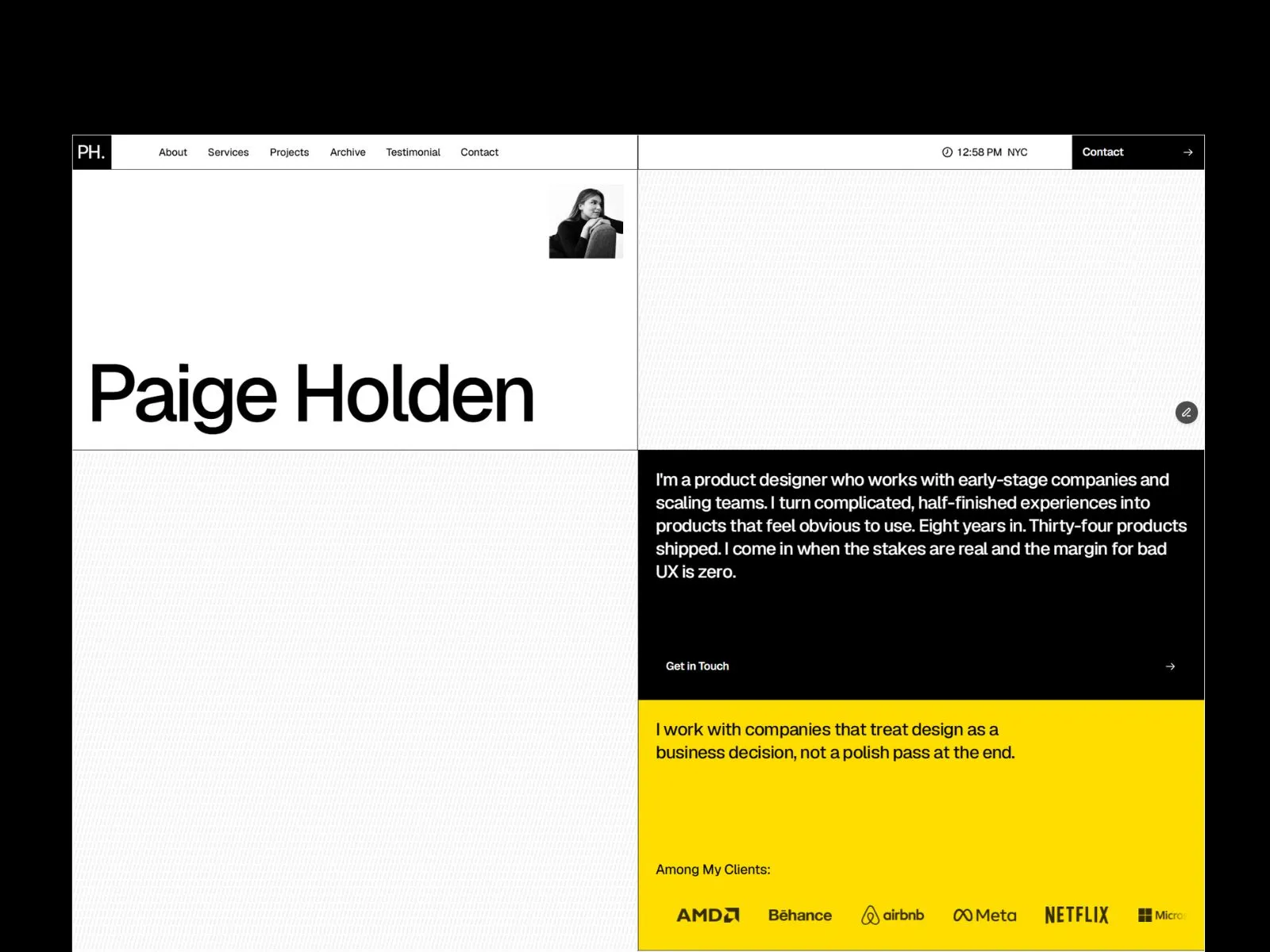
If you’re looking for a starting point, I specialize in custom websites for small businesses and has worked with everyone from therapy practices to architecture firms.
So Which One Is Right for You?
If you’re early-stage, pre-revenue, and need something online this week with no budget, a DIY site gets you there. Use it as a placeholder and plan to upgrade when you can.
If you’re an established small business or you’re serious about getting clients through your website rather than just having one, hiring a professional is almost always the better investment. The difference between a site that sits there and a site that generates inquiries usually comes down to how it was built and whether anyone thought about the visitor’s experience when building it.
Your website is often the first thing a potential client sees. It’s worth making sure it’s working for you, not just existing.