A potential customer visits your website, and within seconds, they form an opinion about your entire business.
In 2025, these quick judgments happen faster than ever, and the stakes are high. Your website isn’t just a digital brochure anymore; it works hard for you. It acts as your best employee, your most convincing salesperson, and often your first interaction with customers.
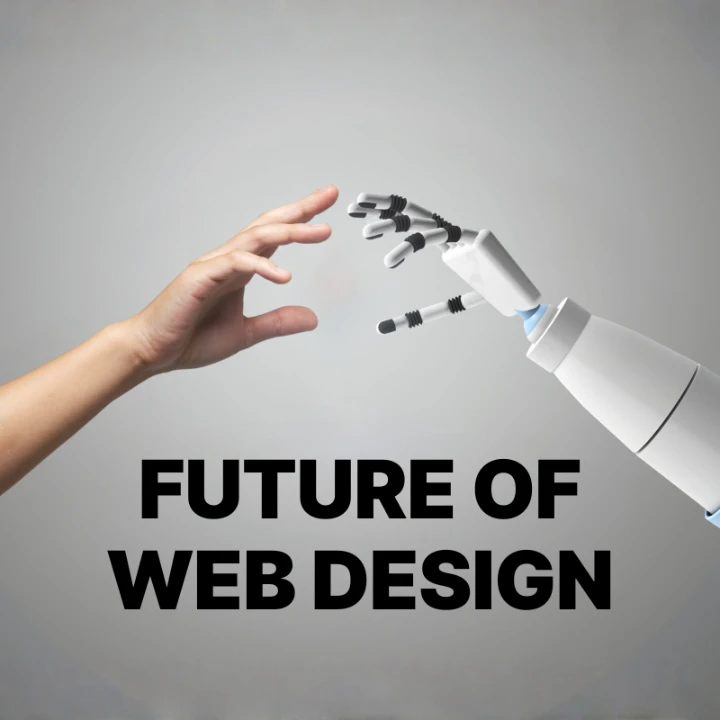
As we move through 2025, web design is changing rapidly. Artificial intelligence is now a reality, user expectations are higher than ever, and the difference between great design and effective functionality is more important than before.
If you’re a business owner looking to keep your online presence relevant, competitive, and profitable, you’re in the right place. Let’s look at what the future of web design means for your business, and more importantly, what you should focus on now to stay ahead.
AI-Powered Personalization: Your Website’s New Superpower

Remember when we thought having a mobile-responsive website was innovative? Those days seem like a long time ago. In 2025, the big change is AI-powered personalization. It’s changing how websites engage with visitors.
What AI Personalization Actually Means for Your Business
Think of AI personalization as having a conversation with each website visitor individually, even when thousands are browsing at the same time.
Your website can now change in real-time, showing different content, adjusting layouts, and recommending products based on each visitor’s behavior, location, and preferences.
For example, a returning customer from Seattle might see rain gear highlighted on your outdoor equipment site, while someone in Miami sees swimwear front and center.
This isn’t about invasive tracking; it’s about being relevant and respecting your visitors’ time.
Implementing Smart Personalization Without Breaking the Bank
You don’t need a big budget to get started. Focus on these practical steps:
Personalize email journeys based on web behavior. When someone leaves items in their cart or spends time on certain pages, your follow-up should reflect that interest. This connection between your website and communications makes customers feel understood, not watched.
Begin with content blocks that adapt to users’ navigation patterns throughout your site. Tools like dynamic content platforms can work seamlessly with your existing website, displaying different messages to both first-time visitors and returning customers.
Use AI chatbots wisely—not to bother people, but to truly help. A well-programmed chatbot can answer 80% of common questions. This allows your team to deal with more complex inquiries while providing instant support at 3 AM when your customer service team is off duty.
Speed and Performance: The Non-Negotiable Foundation
Here’s a sobering truth: Users will leave your site if it doesn’t load in under two seconds. Not five seconds. Not three. Just two seconds or less. Google’s research shows that as page load time goes from one to three seconds, the chance of users bouncing increases by 32%. Your beautiful design means nothing if people never get to see it.
Core Web Vitals Aren’t Optional Anymore
Google’s Core Web Vitals have changed from suggestions to requirements. These metrics, Largest Contentful Paint, Interaction to Next Paint, and Cumulative Layout Shift, directly affect your search rankings and user experience.
Largest Contentful Paint (LCP) measures loading performance. Your main content should load within 2.5 seconds. This means optimizing images, using next-generation formats like WebP, and implementing lazy loading for below-the-fold content.
Interaction to Next Paint (INP) measures how quickly a webpage responds visually after you interact with it, like clicking a button or typing. It tracks the time between your action and the next frame that shows a visible change. A low INP score means the site feels fast and responsive, while a high score signals lag or poor interactivity.
Cumulative Layout Shift (CLS) ensures visual stability. Nothing frustrates users more than clicking a button, only to have the page shift and hit something else. Reserve space for images and ads so content doesn’t jump around as it loads.
The Real-World Impact of Speed
Let’s talk money. Amazon discovered that every 100 milliseconds of delay costs them 1% in sales. For a small business earning $500,000 a year, that amounts to $5,000 annually.
For larger companies, it reaches millions. Speed is not just a nice feature; it’s essential for business.
Consider implementing a Content Delivery Network (CDN) that serves your website from servers closest to your visitors.
Compress everything that can be compressed. Minimize redirects. Every fraction of a second matters because every fraction of a second represents real revenue.
Accessibility: Designing for Everyone Means More Customers
Accessibility in web design isn’t just about meeting compliance requirements, though there are important legal aspects to consider. It’s about reaching more customers and improving everyone’s experience.
When you design for people with disabilities, you naturally create a cleaner and more intuitive experience for all users.
The Business Case for Accessible Design
Over 1 billion people worldwide have some form of disability. That’s not a niche market—it’s a massive audience. In the United States alone, people with disabilities represent $490 billion in disposable income. When your website excludes them, you’re literally turning away paying customers.
Practical Accessibility Improvements for 2025
Color contrast matters more than aesthetics. That trendy light gray text on a white background? It’s beautiful in your design mockups, but unreadable for millions.
Use contrast checkers to ensure text meets WCAG 2.1 Level AA standards (a 4.5:1 ratio for normal text).
Keyboard navigation is essential. Many users can’t use a mouse and navigate only with the keyboard. Every interactive element should be accessible using the Tab, Enter, and Arrow keys. Test this yourself. Try browsing your entire site without using your mouse.
Alternative text for images isn’t optional. Screen readers need clear alt text to explain what is in your images. Saying “Image of person” is not helpful. Saying “Customer John Smith installing our solar panels on his roof in Denver” tells a story and improves SEO at the same time.
Captions and transcripts make video accessible—and more engaging for everyone. People watch videos in sound-off environments constantly. Captions aren’t just for deaf users; they’re for commuters, office workers, and anyone who prefers reading along.
Immersive Experiences: Beyond Flat Design
In 2025, websites will focus more on experiences. They will blend browsing with actual interaction. This doesn’t mean filling your pages with pointless animations.
It means using technology in a smart way to create lasting interactions that meet your business goals.
Micro-Interactions That Make Big Impressions
Micro-interactions are the small animations and responses that occur when users engage with your site. A button that changes color when hovered over, a satisfying checkmark animation when a form submits successfully, or a smooth transition between pages; these details subtly communicate to users that your site is polished and trustworthy.
The key is subtlety. Animation should improve understanding, not distract from it. When a user adds a product to their cart, a gentle animation that shows the item “flying” into the cart icon gives immediate feedback and feels rewarding. This is good micro-interaction design.
Strategic Use of 3D and Interactive Elements
Three-dimensional elements and interactive features are becoming easier to access and more efficient. Furniture retailers allow customers to rotate products 360 degrees or place items virtually in their rooms through augmented reality. Real estate websites provide immersive property tours. E-commerce sites offer product customization with real-time visual previews.
The question isn’t whether to use these technologies, but when and why. Ask yourself: Does this improve the user’s understanding or decision-making process? If you sell complex products that are hard to visualize, 3D models might be necessary. If you sell simple services, they might just be unnecessary additions.
Dark Mode and Color Adaptability
Dark mode isn’t just a trend; it’s a user preference that reduces eye strain and saves battery life on mobile devices. In 2025, users expect a dark mode option, especially for content-heavy sites or apps they use often.
Design systems should include both light and dark modes from the beginning, not as an afterthought. This requires focusing on color relationships and contrast ratios instead of just absolute colors.
Voice and Conversational Interfaces
“Hey Siri, find me a local plumber.” “Alexa, order more coffee.” Voice search and conversational interfaces are changing how people look for and engage with businesses online. By 2025, voice commerce is expected to hit $40 billion in the U.S. alone.
Optimizing for Voice Search
Voice queries are different from typed searches. When typing, a person might search for “best Italian restaurant in Chicago.” When speaking, they will ask, “What’s the best Italian restaurant near me?” Voice queries tend to be longer, more conversational, and often based on questions.
To improve voice search, focus on natural language and a question-and-answer format. Create FAQ sections that directly address common questions. Use structured data markup to help search engines understand your content and feature it in voice results.
Conversational Design Principles
Conversational interfaces, whether they are voice-activated or text-based chatbots, should feel helpful and not robotic. They need to understand context, manage errors smoothly, and lead users to solutions without making them feel foolish.
The best conversational interfaces in 2025 use natural language processing to understand intent instead of just keywords. If a user asks your chatbot, “Is this available in blue?” right after viewing a specific product, the system should recognize what “this” refers to. Context is crucial.
Privacy-First Design and Ethical Data Practices
In an era of data breaches and privacy concerns, how you handle user data directly impacts trust and ultimately conversions. The future of web design isn’t just about aesthetics and functionality. It focuses on building confidence through transparent and ethical practices.
Beyond Cookie Consent Banners
Yes, you need cookie consent tools that follow the rules, but that’s just the starting point. Privacy-first design involves reducing data collection, being clear about how you use data, and giving users genuine control.
Rather than using a vague banner like “We use cookies to improve your experience,” provide specific details about what you are tracking and why. Saying, “We use analytics to know which blog posts are most helpful so we can produce more content like that,” is honest and makes sense. On the other hand, “We share your data with 247 advertising partners” is not.
Building Trust Through Transparency
Display trust signals prominently, such as security badges, clear privacy policies written in plain English, and transparent pricing without hidden fees. In 2025, businesses that respect user privacy are standing out from competitors who don’t.
Consider using progressive disclosure for data collection. Don’t ask for a phone number until it’s actually needed. Explain why you need each piece of information. Saying, “We need your email to send order confirmations,” makes sense. However, requiring an email, phone number, address, and birthday just to browse a catalog does not.
Mobile-First Isn’t Enough—Think Mobile-Only
Mobile traffic surpassed desktop years ago, but in 2025, for many businesses, mobile isn’t just first—it’s only. More than 60% of web traffic now comes from mobile devices, and that percentage continues climbing.
Designing for Thumbs, Not Cursors
Mobile-first design means rethinking everything for smaller screens and touch interfaces. Buttons should be large enough to tap easily, at least 44×44 pixels. Important actions should be in easy thumb reach, typically the bottom half of the screen.
Navigation patterns need to be made for mobile. Hamburger menus are fine, but consider sticky bottom navigation bars for key actions. Forms should be simple, with smart defaults and auto-complete where possible. Every field you remove increases form completion rates.
Progressive Web Apps: The Best of Both Worlds
Progressive Web Apps (PWAs) combine the convenience of native apps with the accessibility of websites. They can work offline, send push notifications, and be “installed” on a user’s home screen, all without needing app store approval or downloads.
For businesses, PWAs provide important benefits: one codebase for all platforms, instant updates without app store delays, and no installation barriers. Companies like Twitter, Starbucks, and Pinterest have experienced significant engagement increases after launching PWAs.
Frequently Asked Questions
What is the most important web design trend for businesses in 2025?
AI-powered personalization is the most impactful trend, allowing websites to adapt content and experiences to individual users in real-time. However, speed and performance remain the foundation—without fast loading times, no other features matter.
How much should a small business budget for web design in 2025?
Expect to spend between $5,000 and $15,000 for a professional small business website with modern features. For e-commerce or more complex functionality, the cost may range from $15,000 to over $50,000. Monthly maintenance and hosting usually cost between $100 and $500. Keep in mind that your website is an investment that operates around the clock to generate leads and sales.
Do I need to redesign my website completely to stay current?
Not necessarily. Many improvements can be made step by step, such as improving speed, adding AI chat features, or improving the mobile experience. A complete redesign usually makes sense every 3 to 4 years, but ongoing improvements help keep your site competitive between major updates.
How important is accessibility for small business websites?
Accessible websites are crucial. In addition to the ethical reasons and legal rules, they attract more customers, rank higher in search engines, and offer better experiences for all users. Many accessibility upgrades also improve SEO and usability overall.
What’s the biggest mistake businesses make with web design in 2025?
Prioritizing appearance over performance can lead to problems. Beautiful designs that load slowly, don’t work on mobile, or confuse users will fail, no matter how appealing they are. Function should come first, with form improving that function—not the other way around.
How do I know if my website needs AI features?
If you have a lot of traffic, different customer groups, or complicated products and services, AI personalization can really boost conversions. Begin with simple tools like chatbots or personalized product suggestions. After that, you can consider investing in more complex AI systems.
Your Website Is Your Future—Invest Wisely
The future of web design focuses on implementing technologies and strategies that truly serve your customers and help your business grow. In 2025, successful websites will balance modern features with key principles: speed, accessibility, clarity, and trust.
Your website should reflect your values and approach to customer service. It should load quickly, function well on any device, welcome everyone regardless of ability, respect user privacy, and make every interaction easy.
The businesses that succeed in 2025 and beyond won’t be the ones with the most flashy designs or features. Instead, they will be those who prioritize user experience, remain flexible enough to embrace useful innovations, and remember that a real person is behind every screen, looking for solutions to their problems.
Ready to Future-Proof Your Website?
Don’t wait for your competitors to leave you behind. Begin with a comprehensive website audit to assess your current performance in terms of speed, accessibility, mobile experience, and user engagement. Then prioritize improvements based on what will have the biggest impact on your specific business goals.
The future of web design is happening now. The question is: will your business be ready to meet it?
Do you need a professional website for your business that remains relevant in the years to come? Get a free consultation today.